
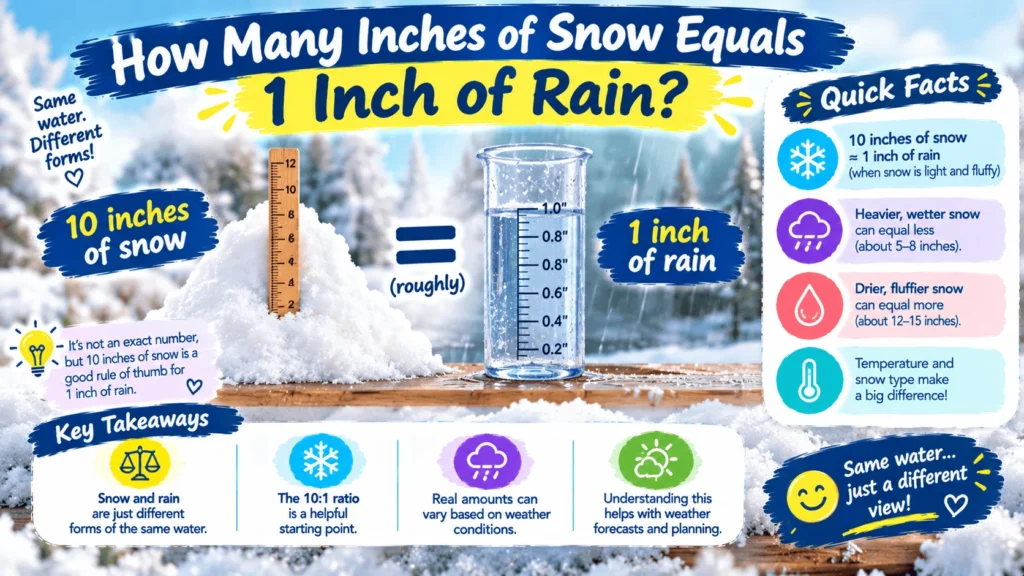
Quick Answer:
1 inch of rain is usually equal to about 10 inches of snow. This is called the snow-to-rain ratio.
Formula:
Rainfall (inches) × 10 = Snowfall (inches)Example:
1 inch of rain × 10 = about 10 inches of snow(The actual amount can vary from about 5 inches to 15+ inches depending on snow type and temperature.)
If you have ever wondered how many inches of snow equals 1 inch of rain, you are comparing two very different ways water falls from the sky. Rain is dense liquid water, while snow is frozen water mixed with air pockets, so the same amount of water can create a much larger layer of snow on the ground. Understanding this conversion helps you make sense of weather forecasts, snow totals, winter storms, and snowfall measurements. With simple comparisons, conversion charts, and everyday examples, you can quickly visualize how much snow a certain amount of rain can produce.
Snow to Rain Conversion Chart
The relationship between rain and snow is usually estimated using a 10:1 snow-to-liquid ratio.
| Rain Amount | Approximate Snow Amount | Real-World Meaning |
|---|---|---|
| 0.1 inch rain | 1 inch snow | Light dusting |
| 0.25 inch rain | 2.5 inches snow | Small snowfall |
| 0.5 inch rain | 5 inches snow | Noticeable snow cover |
| 1 inch rain | 10 inches snow | Typical major snowfall |
| 2 inches rain | 20 inches snow | Heavy snowstorm |
| 3 inches rain | 30 inches snow | Extreme snowfall |
Quick conversion rule:
1 inch of rain ≈ 10 inches of snow
What Does 1 Inch of Rain Turn Into as Snow?
Rain and snow contain the same basic ingredient: water. The difference is how that water is stored.
When water falls as rain, it stays in liquid form and spreads across surfaces. When it falls as snow, ice crystals trap air between them, creating a fluffy layer that takes up much more space.
A typical snow-to-rain conversion uses:
10 inches of snow = 1 inch of liquid water
This means if a winter storm produces enough moisture to equal 1 inch of rain, the snowfall could measure around 10 inches deep.
However, snow density changes everything.
Why Does Snow Amount Vary?
Not all snow is the same. Temperature and moisture levels affect how much snow forms from the same amount of water.
Wet Snow
Wet snow happens when temperatures are near freezing.
Typical ratio:
5 inches of snow = 1 inch of rain
Wet snow is:
- Heavy
- Dense
- Harder to shovel
- More likely to stick to trees and power lines
Average Snow
This is the common estimate used by many weather reports.
Typical ratio:
10 inches of snow = 1 inch of rain
This is the standard conversion most people use.
Powdery Snow
Cold air creates light, fluffy snow.
Typical ratio:
15–20 inches of snow = 1 inch of rain
Powder snow:
- Feels lighter
- Blows easily
- Creates deeper snowdrifts
Real-Life Examples of Snow Equivalent to 1 Inch of Rain
Example 1: A Snow-Covered Driveway
Measurement: About 10 inches of snow
Visualization:
Imagine stacking ten standard rulers vertically on your driveway.
Why it helps:
A 10-inch snowfall can cover a driveway enough to require serious shoveling.
Interesting insight:
The water inside that snow may only be about 1 inch deep after melting.
Example 2: A Car Covered Overnight
Measurement: 8–12 inches of snow
Visualization:
The snow could reach from the bottom of your car door to near the middle of the wheel.
Why it helps:
A single storm can completely hide parts of a parked vehicle.
Interesting insight:
The melted snow may look surprisingly small compared with the original pile.
Example 3: A Snowy Sidewalk
Measurement: 4–6 inches of snow
Visualization:
About the height of a coffee mug lying on its side.
Why it helps:
Even half an inch of rain moisture can create several inches of snow.
Interesting insight:
Sidewalk snow depth often looks greater because it piles unevenly.
Example 4: A Snowstorm Forecast
Measurement: 20 inches of snow
Visualization:
Almost two feet of snow — about knee height for many adults.
Why it helps:
A forecast calling for 2 inches of liquid precipitation could produce around 20 inches of snow.
Interesting insight:
Snow forecasts depend heavily on temperature.
Example 5: A Child Standing in Snow
Measurement: 10 inches of snow
Visualization:
The snow may reach above a young child’s ankles.
Why it helps:
Human body comparisons make snow depth easier to imagine.
Interesting insight:
Small differences in snow depth can greatly affect walking.
Example 6: A Snowy Yard
Measurement: 10–15 inches
Visualization:
Similar to placing several hardcover books flat on the grass.
Why it helps:
Snow depth across a yard can look much larger than the melted water amount.
Interesting insight:
Most of the snow volume comes from trapped air.
Example 7: Roof Snow Load
Measurement: 10 inches of snow
Visualization:
A blanket several inches thick covering an entire roof.
Why it helps:
Roof safety depends on snow weight, not only depth.
Interesting insight:
Wet snow can weigh several times more than fluffy snow.
Example 8: Snow on a Football Field
Measurement: 10 inches
Visualization:
A football field covered with nearly a foot of snow.
Why it helps:
Large areas make snowfall totals easier to understand.
Interesting insight:
The melted water from a huge snowy field may only be a shallow layer.
Comparing Snow and Rain Measurements
Smaller Than 1 Inch of Rain
| Rain | Snow Equivalent |
|---|---|
| 0.1 inch rain | About 1 inch snow |
| 0.25 inch rain | About 2.5 inches snow |
| 0.5 inch rain | About 5 inches snow |
A small amount of rain can create several inches of snowfall.
Larger Than 1 Inch of Rain
| Rain | Snow Equivalent |
|---|---|
| 1 inch rain | 10 inches snow |
| 2 inches rain | 20 inches snow |
| 5 inches rain | 50 inches snow |
Large winter storms can produce enormous snow totals from relatively small liquid amounts.
How It Feels to Experience 10 Inches of Snow
A snowfall of around 10 inches feels significant.
Walking
Ten inches of snow can:
- Cover your shoes
- Slow your steps
- Make sidewalks difficult to cross
Driving
A 10-inch snowfall can:
- Reduce tire grip
- Cover road markings
- Require snow removal
Home Life
It may:
- Block doors
- Cover steps
- Require shoveling
- Add weight to roofs
Outdoor Comparison
Ten inches is:
- Less than a foot
- About the length of a large dinner plate
- Similar to stacking several smartphones
Practical Uses of Snow-to-Rain Conversion
Weather Forecasting
Meteorologists use snow-to-liquid ratios to estimate snowfall totals.
A forecast may say:
“0.8 inches of liquid precipitation possible.”
That could mean:
0.8 × 10 = about 8 inches of snow
Winter Driving
Knowing snow depth helps drivers understand:
- Road conditions
- Visibility problems
- Travel risks
Snow Removal Planning
Homeowners use snowfall predictions to estimate:
- Shoveling time
- Snowblower needs
- Ice formation risk
Construction and Roof Safety
Builders consider:
- Snow weight
- Moisture content
- Roof design
Ten inches of fluffy snow is not the same weight as ten inches of wet snow.
Gardening and Water Supply
Melting snow contributes water to:
- Soil
- Rivers
- Reservoirs
One inch of rain equivalent means one inch of water after melting.
Frequently Asked Questions
How many inches of snow equal 1 inch of rain?
About 10 inches of snow equals 1 inch of rain under average conditions. This is the standard 10:1 snow-to-liquid ratio used for general estimates, but actual snowfall can vary depending on temperature and snow type.
Does 10 inches of snow always equal 1 inch of rain?
No. Ten inches is only an average estimate. Wet, heavy snow may need only 5 inches to equal 1 inch of rain, while fluffy powder snow may require 15–20 inches.
How much water is in 12 inches of snow?
Twelve inches of average snow contains about 1.2 inches of liquid water when melted. The exact amount depends on how dense the snow is.
Is wet snow heavier than dry snow?
Yes. Wet snow contains more water and less trapped air, making it much heavier than powdery snow. The same depth of wet snow can put much more stress on roofs and structures.
How much snow comes from 0.5 inches of rain?
Using the average 10:1 ratio:
0.5 inches rain × 10 = about 5 inches of snow
The result may range from roughly 2.5 to 10 inches depending on snow conditions.
How do meteorologists measure snowfall?
Meteorologists measure snowfall depth using snow boards, official measuring stations, and automated weather equipment. They also estimate the liquid water content after melting snow.
Can 1 inch of rain cause a blizzard?
Rain itself does not create a blizzard, but the same amount of moisture falling as snow can create significant snowfall. A storm producing 1 inch of liquid water could potentially create around 10 inches of snow.
Why does snow look like more water than it really is?
Snow contains air spaces between ice crystals. These spaces make snow appear deep, but much of the volume is air rather than frozen water.
How much snow is equal to 1 foot of rain?
Using the 10:1 average ratio:
1 foot of rain = 12 inches of rain
12 × 10 = about 120 inches of snow
That equals roughly 10 feet of snow.
Conclusion
The simple answer is that 1 inch of rain equals about 10 inches of snow using the average snow-to-liquid ratio. This conversion helps you understand weather forecasts, winter storms, and how much water is actually stored in a snowpack.
Remember that snow is not all the same. Cold, fluffy snow can create much deeper totals, while wet snow produces less depth but weighs far more. When you picture ten rulers stacked together, you can quickly visualize what a typical inch of rain might look like as snowfall.