
Quick Answer Box
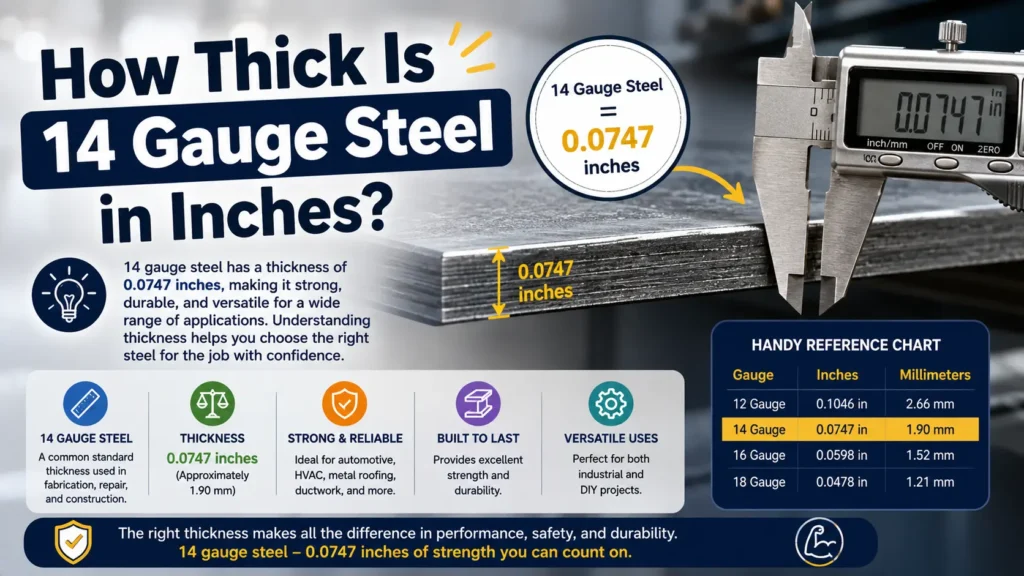
14 gauge steel is approximately 0.0747 inches thick (about 1.9 mm).
This value is based on the standard steel gauge conversion system (U.S. Standard Sheet Steel Gauge).Formula (approx.):
Gauge → Inches (steel) = Refer to standardized gauge chart
14 gauge steel = 0.0747 inches
If you’re trying to understand how thick is 14 gauge steel in inches, you’re probably dealing with construction, metal fabrication, or DIY projects where precision matters. Steel gauge numbers can feel confusing because the higher the number, the thinner the metal becomes.
To make it easier, 14 gauge steel is roughly the thickness of a stack of about 7–8 sheets of standard printer paper. It’s thin enough to bend with the right tools, but still strong enough for structural panels, automotive parts, and industrial applications. In this guide, you’ll see real-world comparisons, conversion tables, and practical examples so you can instantly visualize what this thickness actually means.
Conversion Table: 14 Gauge Steel Thickness
| Gauge Number | Thickness (inches) | Thickness (mm) | Common Use |
|---|---|---|---|
| 10 gauge | 0.1345 in | 3.42 mm | Heavy structural parts |
| 12 gauge | 0.1046 in | 2.66 mm | Frames, machinery |
| 14 gauge | 0.0747 in | 1.90 mm | Panels, brackets |
| 16 gauge | 0.0598 in | 1.52 mm | HVAC ducts, light fabrication |
| 18 gauge | 0.0478 in | 1.21 mm | Sheet metal covers |
What Does 14 Gauge Steel Mean?
Steel gauge is a standardized numbering system used to define sheet metal thickness. Unlike what many people assume, a lower gauge number means thicker steel, while a higher number means thinner material.
So when you hear 14 gauge steel, it refers to a medium-thickness steel sheet commonly used in both industrial and residential applications.
Why It Matters
Understanding steel thickness helps you:
- Choose the right material strength
- Avoid structural failure
- Estimate weight and durability
- Match fabrication requirements
- Ensure safety in construction projects
How 14 Gauge Steel Thickness Is Measured
Steel thickness is measured using precise manufacturing standards. In the U.S., the U.S. Standard Gauge System defines fixed thickness values for sheet steel.
For 14 gauge:
- Thickness = 0.0747 inches
- Equivalent = 1.9 millimeters
This value does not change based on brand or supplier because it follows standardized industrial measurement systems.
Real-Life Examples of 14 Gauge Steel
Here are practical ways to visualize 14 gauge steel in everyday life:
Example 1: Automotive Body Panels
Measurement: ~0.0747 inches
Visualization: Similar thickness to some car door reinforcement sheets
Why it helps: Used in structural vehicle parts where moderate strength is needed
Example 2: Metal Cabinets
Measurement: 14 gauge steel
Visualization: Slightly thicker than a coin stack of 8–10 U.S. quarters
Insight: Common in industrial storage cabinets
Example 3: Kitchen Equipment Frames
Measurement: 14 gauge steel
Visualization: Stronger than aluminum foil but still bendable under force
Use: Commercial kitchen tables and supports
Example 4: Stair Rail Supports
Measurement: 14 gauge steel
Visualization: About the thickness of a thick credit card stack
Insight: Balances strength and weight
Example 5: HVAC Duct Reinforcement
Measurement: 14 gauge steel
Visualization: Thicker than standard duct sheet metal
Why it matters: Used in high-pressure airflow systems
Example 6: Metal Fencing Posts
Measurement: 14 gauge steel tubing walls
Visualization: Thin but rigid enough to resist bending
Use: Outdoor fencing structures
Example 7: Electrical Enclosures
Measurement: 14 gauge steel
Visualization: Feels solid and industrial when tapped
Insight: Protects sensitive electrical equipment
Example 8: Tool Storage Boxes
Measurement: 14 gauge steel body
Visualization: Heavier and sturdier than consumer-grade boxes
Benefit: High durability for workshop use
Example 9: Truck Body Panels
Measurement: 14 gauge steel sections
Visualization: Slight flex under pressure but strong overall
Use: Cargo protection and framing
Example 10: Industrial Machine Covers
Measurement: 14 gauge steel
Visualization: Solid, slightly bend-resistant sheet
Purpose: Safety shielding in factories
Comparison: 14 Gauge Steel vs Other Thicknesses
Thinner Materials
- 18 gauge steel → much thinner, easier to bend
- 20 gauge steel → used for lightweight panels
- Aluminum sheet → often thinner but less strong
14 Gauge Steel in the Middle
- Balanced strength and flexibility
- Common “workhorse” thickness in fabrication
Thicker Materials
- 12 gauge steel → significantly stronger and heavier
- 10 gauge steel → industrial heavy-duty applications
- 1/8 inch steel plate → structural-grade strength
Everyday Comparison
- Slightly thicker than a U.S. nickel stack of 15–16 coins
- Similar rigidity to a sturdy metal shelf bracket
- Thinner than a standard pencil diameter
How 14 Gauge Steel Feels in Real Life
When you handle 14 gauge steel, it feels:
- Solid but not overly heavy
- Slightly flexible under strong pressure
- Tough enough to resist dents in normal use
- Heavier than thin sheet metal but manageable for DIY work
Human Perspective
- You can bend it with tools, not hands
- Feels like “real structural metal,” not decorative sheet
- Common in garage, workshop, and industrial environments
Practical Uses of 14 Gauge Steel
You’ll commonly find 14 gauge steel in:
Construction
- Structural framing components
- Support brackets
- Reinforcement plates
Manufacturing
- Machine housings
- Industrial cabinets
- Equipment guards
Automotive Industry
- Truck panels
- Reinforcement parts
- Structural supports
HVAC Systems
- Air ducts
- Pressure-resistant enclosures
DIY & Home Projects
- Custom metal tables
- Garage shelving systems
- Tool storage builds
FAQ: 14 Gauge Steel Thickness Explained
How thick is 14 gauge steel in inches exactly?
14 gauge steel is approximately 0.0747 inches thick, based on the U.S. standard steel gauge chart. This equals about 1.9 mm, making it a medium-strength sheet metal used in construction and fabrication.
Is 14 gauge steel strong?
Yes, 14 gauge steel is considered moderately strong. It can handle structural loads in many applications like cabinets, brackets, and frames, but it is not as strong as thicker steel like 12 or 10 gauge.
Can 14 gauge steel bend easily?
Not by hand. You need tools like a press brake or heavy force to bend it. It is flexible under industrial equipment but rigid in everyday handling.
What is thicker: 14 gauge or 16 gauge steel?
14 gauge steel is thicker than 16 gauge. The lower the gauge number, the thicker and stronger the steel sheet.
What is 14 gauge steel used for?
It is used in automotive panels, industrial cabinets, HVAC systems, structural supports, and machine housings due to its balance of strength and workability.
How many mm is 14 gauge steel?
14 gauge steel is approximately 1.9 millimeters thick.
Is 14 gauge steel good for outdoor use?
Yes, especially when coated or galvanized. It is commonly used in outdoor structures like fencing and equipment enclosures.
How heavy is 14 gauge steel?
Weight depends on sheet size, but it is heavier than thinner gauges and typically used where durability matters more than portability.
Is 14 gauge steel stronger than aluminum?
Yes, steel is generally stronger and more rigid than aluminum at the same thickness.
What industries use 14 gauge steel most?
Construction, automotive, HVAC, manufacturing, and metal fabrication industries commonly use 14 gauge steel.
Conclusion
14 gauge steel measures about 0.0747 inches (1.9 mm), making it a versatile medium-thickness material used across construction, automotive, and industrial applications. It strikes a balance between strength and flexibility, which is why it appears so frequently in real-world fabrication projects. Once you can visualize it—roughly between light sheet metal and heavy structural plate—you’ll easily understand where and why it’s used.